

Fontos információ
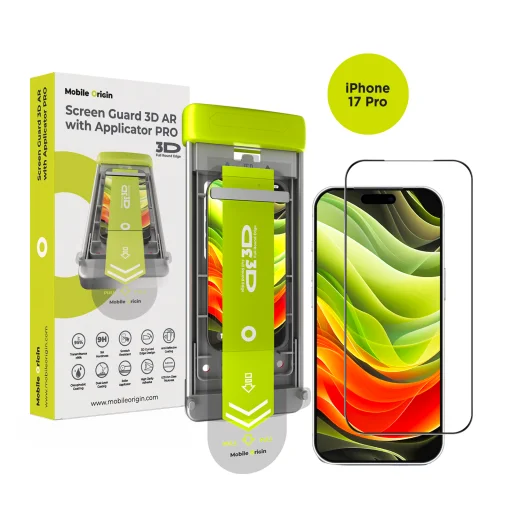
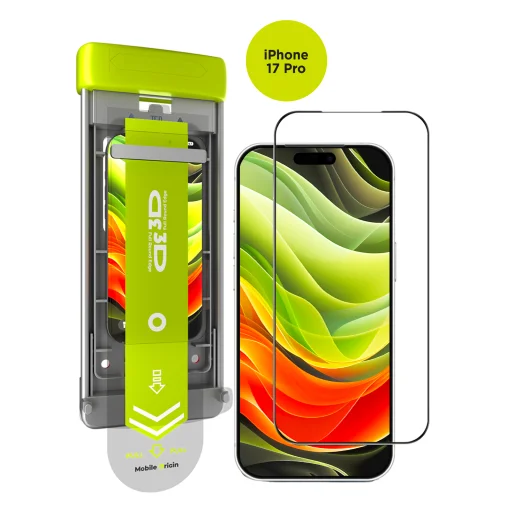
Mobile Origin Screen Guard 3D AR with Applicator PRO iPhone 17 Pro
Készletinformáció
Ajánlott termékek
Mobile Origin Screen Guard 3D AR with Applicator PRO iPhone 17 Pro
The Mobile Origin 3D Glass Screen Protector is a tempered protective glass for iPhone whose 3D curved edges cover the display all the way to the rounded edges of the phone. The Corning glass goes through a double-ion exchange that gives it a 9H surface hardness and protects the display against scratches and impacts. An anti-reflective and oleophobic coating also reduce glare and the build-up of fingerprints.
- 3D curved edges: the glass covers the display right up to the rounded edges of the iPhone.
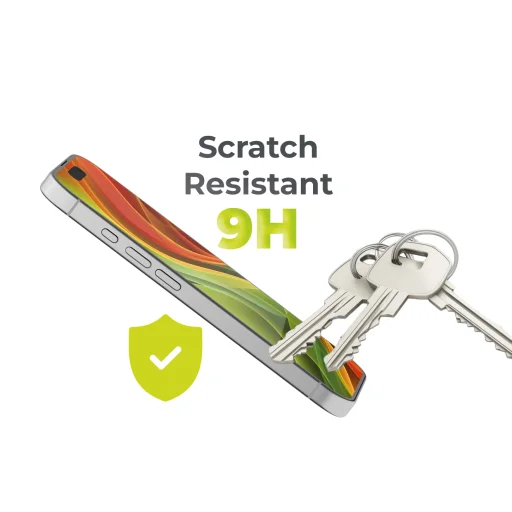
- 9H hardness and double-strengthened Corning glass: the surface resists scratches and the glass passed a drop test with a 64 g steel ball from a height of 120 cm.
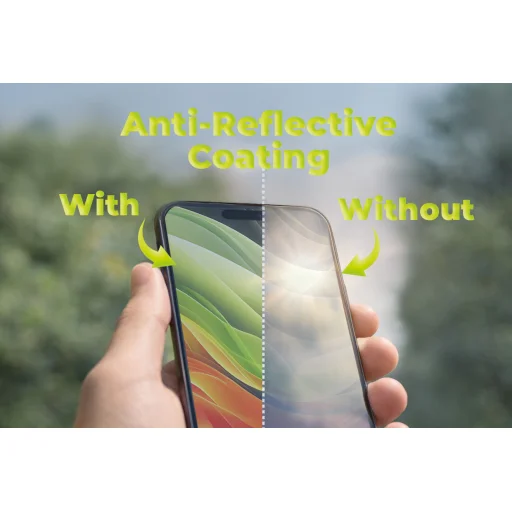
- Anti-reflective coating: less glare and better display readability in direct sunlight.
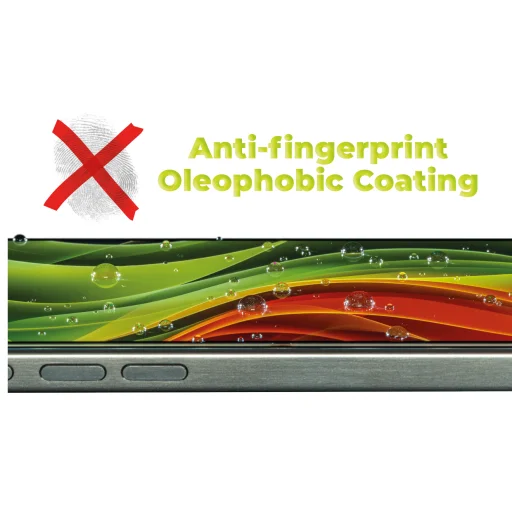
- Oleophobic anti-fingerprint coating: the surface repels grease and fingerprints and keeps a water contact angle above 105° after 10,000 abrasion cycles.
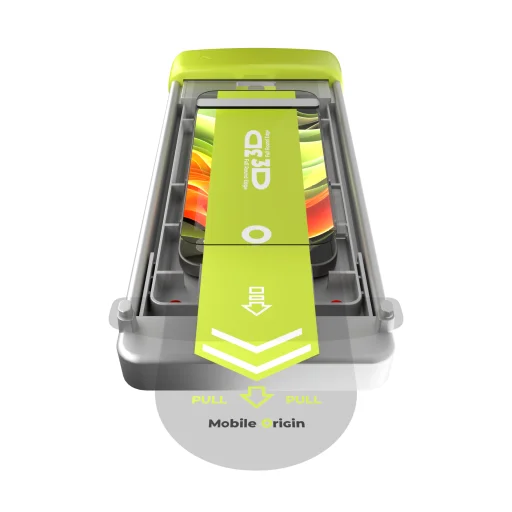
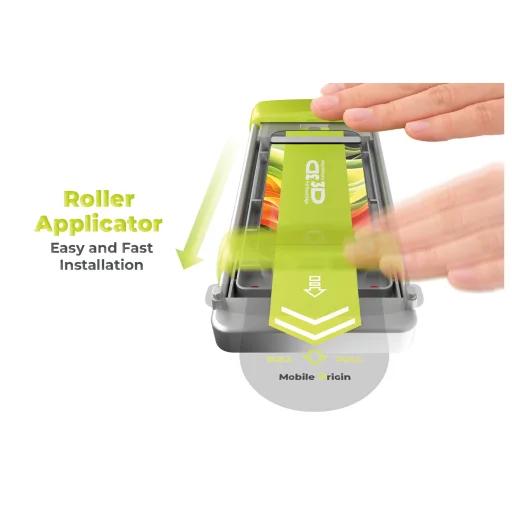
- Easy fitting with an applicator: the guide applicator and the antistatic layer help you fit the glass straight and bubble-free.
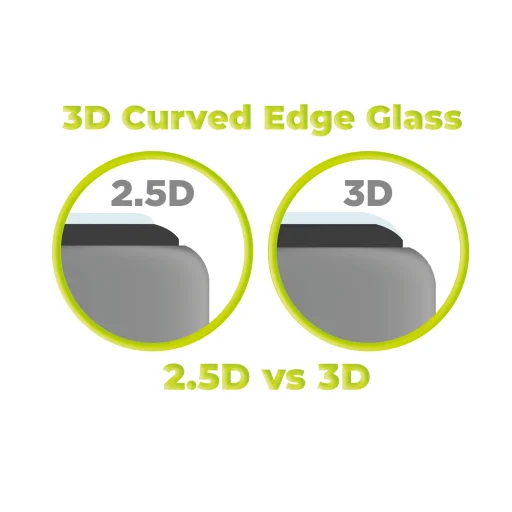
3D curved edges
Flat 2.5D glass has only a slightly rounded top edge and ends just short of the curved edge of the display. On an iPhone with rounded display edges, this leaves a narrow uncovered strip around the perimeter. The 3D glass is shaped to the same curvature as the display and covers it right up to the point where it meets the phone's frame. Full-surface coverage makes sense especially on a phone without a case or with a thin case, where flat glass would leave the edges of the display exposed.
Anti-reflective coating
The anti-reflective (AR) coating reduces the amount of light reflected back off the surface of the glass. In direct sunlight or under strong artificial lighting, there is therefore less mirroring on the display and the content stays more readable. The difference is most noticeable outdoors, where glossy glass reflects the sky and surroundings and the display is harder to read. For frequent outdoor use, the anti-reflective treatment is handy because it reduces the need to turn the brightness up to maximum.
Oleophobic anti-fingerprint coating
The top Nano AF oleophobic coating repels grease from your fingers, so fingerprints cling to the glass less and wipe off easily. The effectiveness of the coating is described by the water contact angle: on new glass it exceeds 115°, which means water and grease stay in droplets and don't spread across the surface.
Durability is verified by an abrasion test in which the surface is repeatedly rubbed with steel wool; even after 10,000 cycles the glass keeps a contact angle above 105°, so its ability to repel fingerprints lasts even after months of everyday use. As a result, the display gets fewer smudges and wiping it with a cloth is quicker.
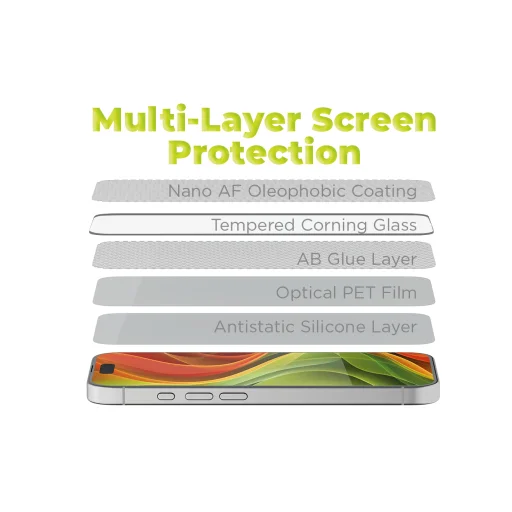
Five layers of protection
The glass is made up of five layers that together measure 0.71 mm. From top to bottom there is the Nano AF oleophobic anti-fingerprint coating (approximately 1 µm), the Corning tempered glass (0.33 mm) as the main protection, OCA optical adhesive (approximately 270 µm) for an optically clear bond, a supporting optical PET film (approximately 75 µm), and the bottom antistatic silicone layer (approximately 35 µm) that holds the glass onto the display.
Each layer has one job: surface repellency, mechanical strength, optical bonding, support, and adhesion to the display.
Double-ion exchange
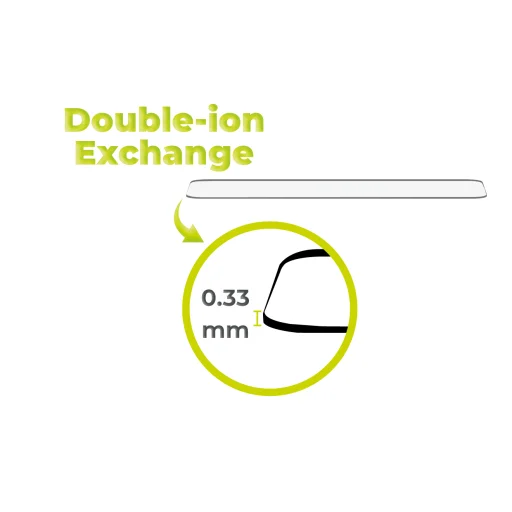
The Corning glass goes through a double-ion exchange, which creates a layer of compressive stress in the surface that resists crack propagation. The surface compressive stress (CS) reaches 820 to 890 MPa, whereas the usual standard is above 800 MPa, and the depth of the ion exchange is 16 to 19 µm. At a glass thickness of just 0.33 mm, this treatment passed a drop test with a steel ball weighing 64 g from a height of 120 cm.
Chemical strengthening therefore increases resistance to impact and cracking, not just to scratching.
9H hardness against scratches
The 9H surface hardness is verified by a pencil test, in which a lead of a defined hardness is drawn across the glass under a load of 750 g. A 9H grade means the surface withstands the hard objects a phone typically encounters in a pocket or bag: keys, coins, or grains of sand. Any scratches then stay on the protective glass, not on the phone's display, and the glass can be replaced with a new one.
High transparency and low haze
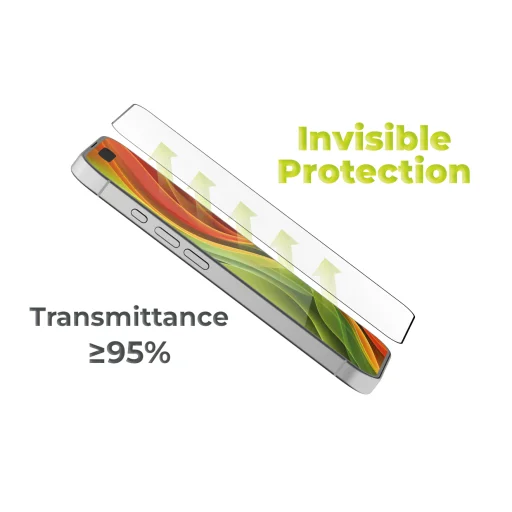
The glass transmits at least 91.4 % of light, so the display beneath it stays bright and the colours true. Just as important as transmittance is haze, that is the proportion of scattered light that causes a milky tint; here it ranges only between 0.22 and 0.28 %. Such low haze means the image doesn't look matte and the glass is practically invisible on the display. As a result, the display protection is barely noticeable visually.
Applicator for precise fitting
An applicator comes with the glass; you place your phone in it and it aligns the glass into the correct position. This does away with aligning by hand, where the glass easily ends up crooked or offset. The applicator holds the glass precisely over the display until it is pressed into place. Precise fitting matters especially with 3D glass with curved edges, where even a small offset affects how the glass sits on the edges.
Step-by-step installation
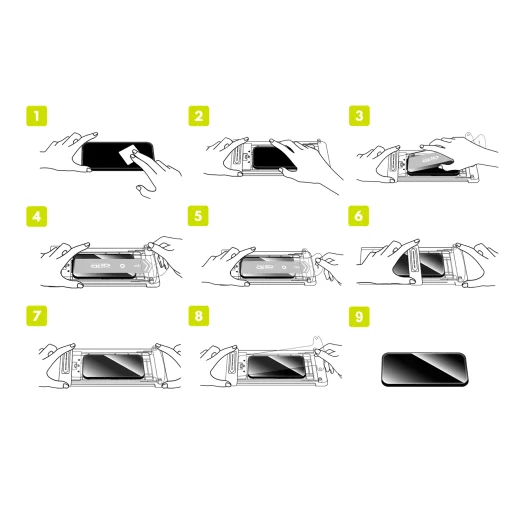
The fitting procedure is broken down into numbered steps: cleaning the display, placing the phone in the applicator, aligning the glass, and pressing it down. The bottom antistatic silicone layer doesn't attract dust and quickly draws air out from under the glass, so no bubbles or bright spots known as snowflakes form beneath it. The glass settles evenly and, once pressed, draws itself down onto the display. You can do the whole process yourself, without a service or special tools.
Package Contents
- 1× ochranné sklo Mobile Origin 3D Glass pro iPhone
- 1× aplikátor pro nasazení skla
- Instalační příslušenství (čisticí utěrka a stěrka)
- Uživatelský manuál